Charging basics
How Mobile EV Charging Works (and When It Beats a Tow)
What a mobile EV charging unit is, how a technician charges your car on the spot, how long it takes and when it is the better choice than towing.
By the ChargePatrol team · Updated · 2 min read
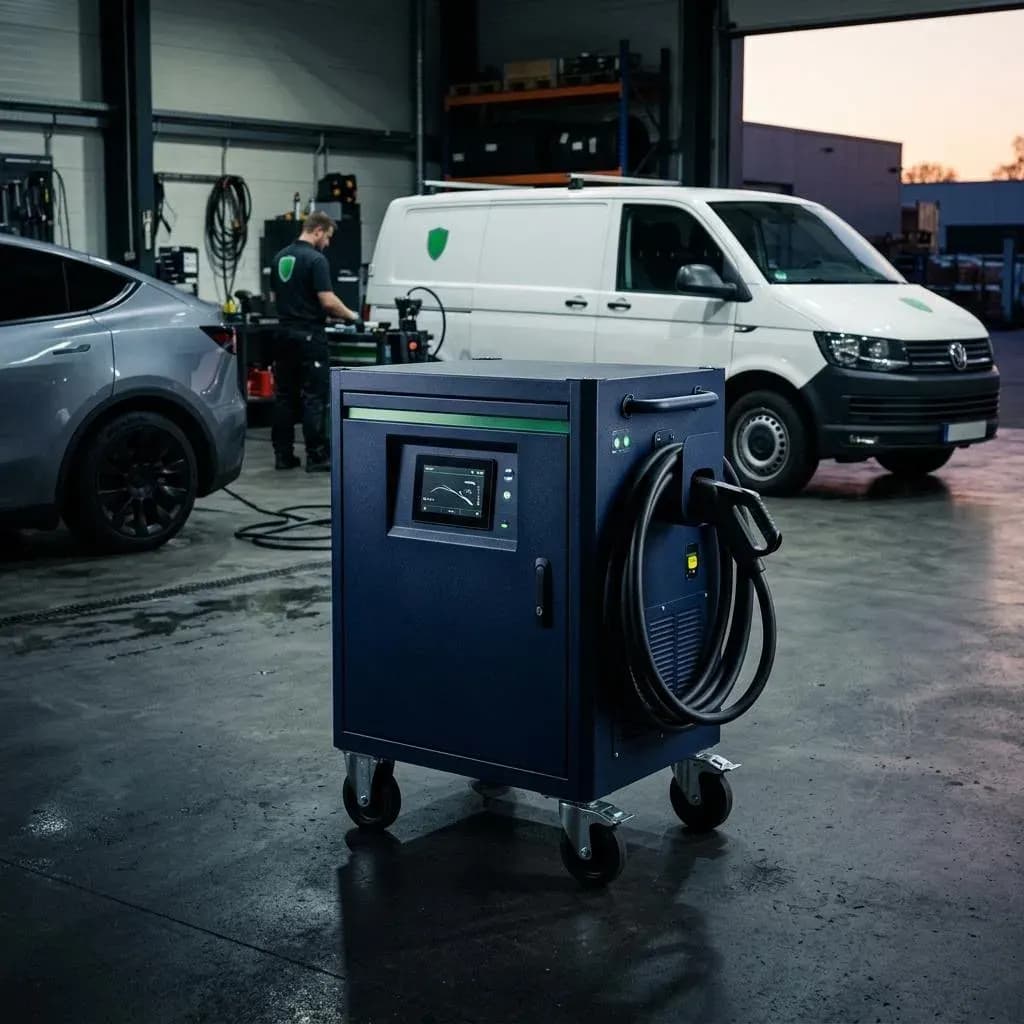
Mobile EV charging means the charger comes to the car instead of the car going to the charger. It is used for roadside emergencies, apartment dwellers without home charging, and fleets that need energy where their vehicles park.
What is inside a mobile charging unit?
There are two broad types. Some services bring a Level 2 AC charger powered by a generator or a borrowed outlet; these add range slowly. Battery-based DC units, like the ones ChargePatrol uses, carry stored energy and deliver Level 3 DC fast charging directly to the battery, which adds range far faster.
Step by step: a typical service call
- You call or request online with your location and vehicle details.
- Dispatch confirms the connector (CCS1, NACS/Tesla or CHAdeMO), price and an arrival estimate.
- The technician parks safely, sets up cones if needed and connects the DC cable.
- Your car accepts charge at the rate its battery allows.
- Once you have enough range to reach a station or get home, the technician disconnects and you drive away.
How long does it take?
Most emergency sessions take roughly 20–45 minutes on site. A typical visit adds about 25–50 miles. Charging speed depends on your car’s charging curve, battery temperature and state of charge; a very cold battery accepts power more slowly.
Mobile charging vs. towing
- Speed: charging on site avoids the tow wait plus the time at a public charger.
- Cost: a mobile charge usually costs less than a long-distance flatbed tow.
- Convenience: you keep your car with you and drive away.
- When towing is better: if the car has a fault, damage, or cannot be reached safely.
Is mobile charging safe for my battery?
Yes. DC charging from a mobile unit uses the same standards and communication protocol as a public fast charger. Your car’s battery management system controls how much power it accepts.